-
 info
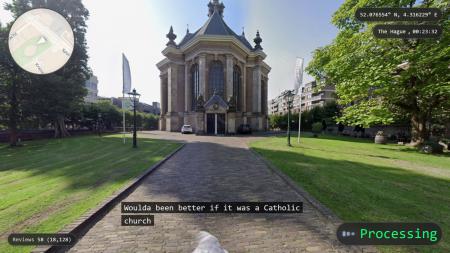
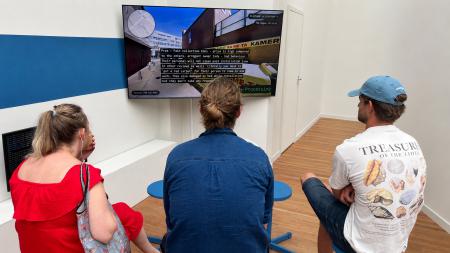
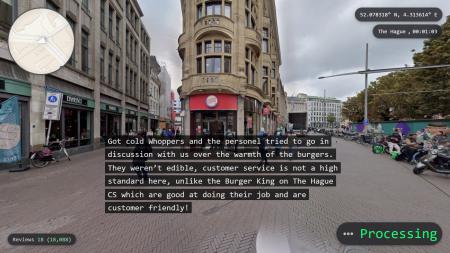
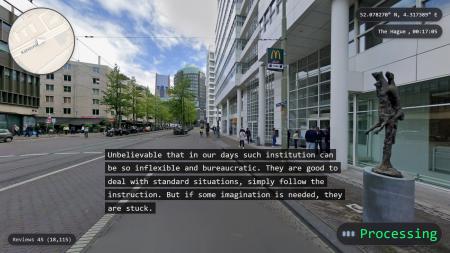
A virtual bot strolls through the city and complains about it. As it wanders, it pulls negative reviews from Google Maps, stopping only to recite the angriest things people have said. The work uses the logic of the virtual dérive: an unplanned drift through a mapped environment. In doing so, it asks what kind of city appears when public space is filtered through platform images, ratings, and user-generated judgments. Rather than treating the map as a neutral tool, Ilja develops custom software to probe and misuse these systems, scraping images and data in search of accidental, personal, and overlooked moments that slip past the platform’s clean, sterilized appearance. Would Not Recommend also points toward a broader artistic approach in which the bot can be reoriented through different geolocated datasets — from Airbnb listings to maps where people report feeling unsafe — so that its voice and behavior change according to the data it inhabits, raising broader questions about how platforms and datasets shape urban life.
-
 info
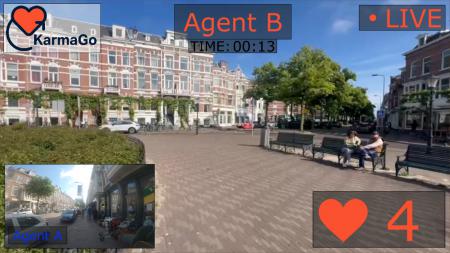
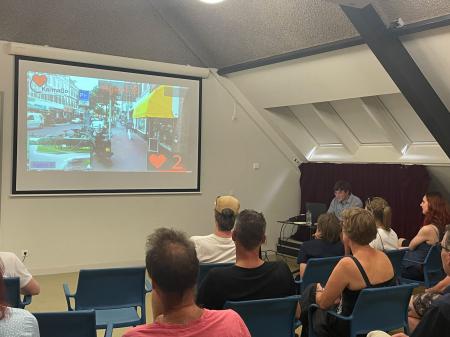
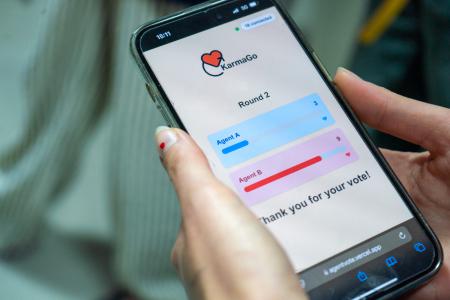
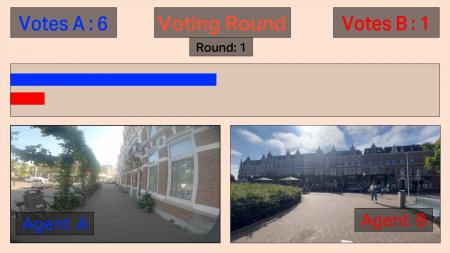
KarmaGo began as a prototype for an app through which an audience could earn virtual karma points. Two performers streamed live video and audio from separate locations to a remotely situated audience. Viewers collectively voted for one of the performers, who would then carry out an act of kindness in public and earn karma on their behalf. This initial system became the starting point for an ongoing research project that brings the mechanics of a video game into real public space. Live performers become playable characters, while the audience collectively decides how they move, what they do, and how they interact with people on the street. Unlike a conventional video game, however, the environment is not scripted. Passers-by, interruptions, refusals, misunderstandings, and unexpected encounters continuously reshape the experience. By allowing decisions made through a screen to produce consequences in the physical world, KarmaGo examines the relationship between collective control and responsibility. The audience is not only watching a performance but actively directing situations involving real people whose reactions cannot be predicted or reset. The project is currently in active development. I am exploring different voting systems, game mechanics, narratives, branching storylines, and decision-making structures that could determine the performers’ actions. The broader aim is to develop an experimental livestream format in which a game unfolds through the uncertainty and social dynamics of everyday life.
-
 info
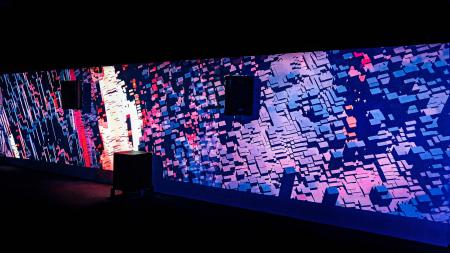
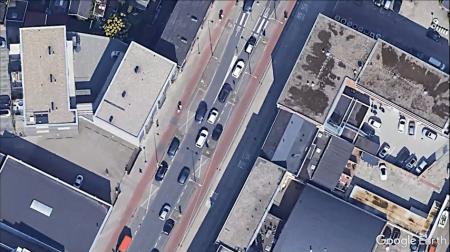
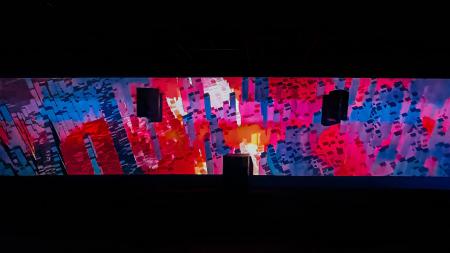
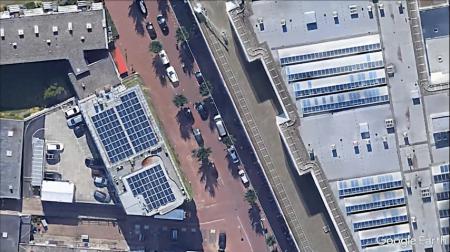
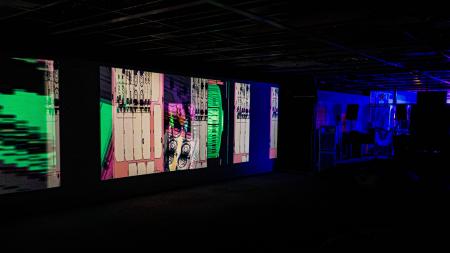
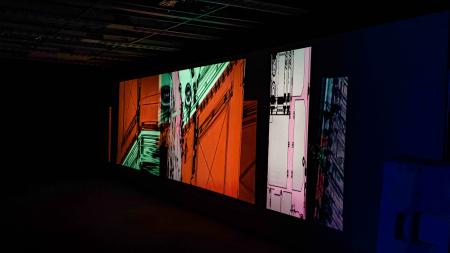
Textilize captures Enschede's evolution from an industrial hub steeped in textile production and hard labor toward a city of digital innovation, where digital arts, culture, and technology are embraced. This transformation is symbolized by a visual journey mapped across the city's historical textile plant buildings and current cultural centers. Using Google Earth Engine, a trajectory is plotted on the map of Enschede. A walkthrough along the path is animated and exported as separate video files. These are imported and sampled in TouchDesigner as source material for generating visuals. The clips are exported and cut together in Adobe Premiere. The generated video is imported into Ableton Live for the audio component. In collaboration with the sound designer, analog gear and software are used to craft and synchronize the sound. Finally, the sound and video are stitched together and exported as a seamless loop in HAP format for playback in Resolume.
-
 info
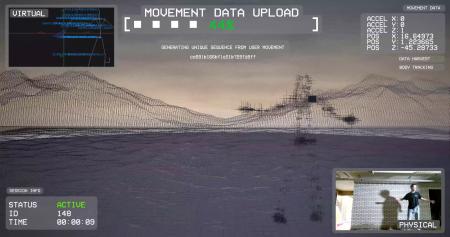
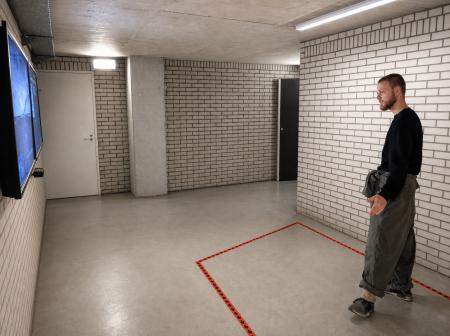
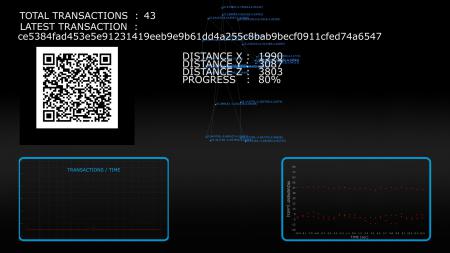
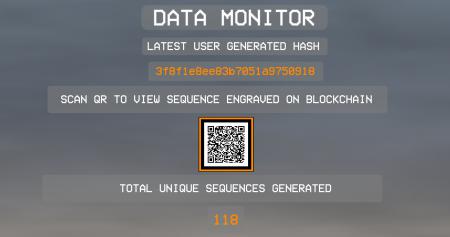
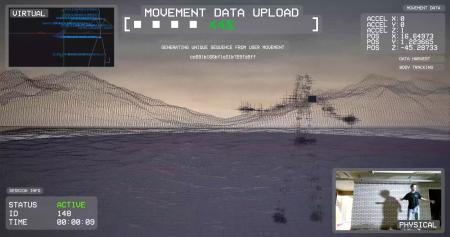
I Was Here uses a visitor's physical movement to produce a permanent digital trace. A motion sensor records the participant's position as they move through the installation. Custom software translates this real-time data into a transaction on the Cosmos blockchain, leaving a unique and publicly verifiable record. The participant sees measurements of their movement and a progress indicator on the main screen. Once the sequence is complete, a second screen displays a QR code linking to the transaction. The work turns the abstract idea of a digital footprint into a direct bodily experience: a temporary action in physical space becomes an enduring entry in a distributed database. It asks what permanence means when ordinary movement can be measured, encoded, and preserved by networked systems.
-
 info
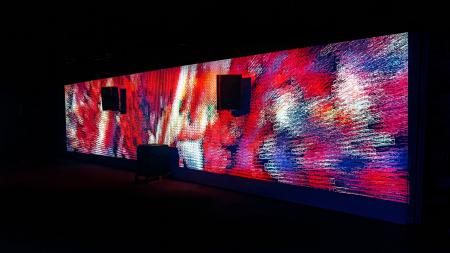
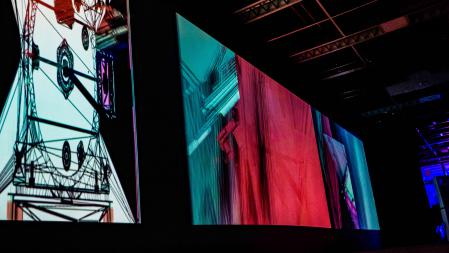
Conceived as an audiovisual installation, Sputnik invites viewers to reflect on the multifaceted nature of our connection to technology. The work asks visitors to reconsider perspectives of technology as either a force for good or evil, asserting that technology, like any tool, is inherently neutral. The crux lies in how humans choose to engage with it. An animated CAD model of a satellite serves as the starting point for the graphics. The video file is imported into a TouchDesigner patch, where generative visual effects are applied and controlled by audio. The audio component consists of a six-minute loop in Ableton Live, separated into stems and mapped to visual effects through tdAbleton. TouchDesigner blends the image across three projectors and outputs it onto canvas.
Websites
Personal website / portfolio website
ilja.ccSocial media
Curriculum vitae
Education
-
2024 - 2026Masters ArtScience Den Haag, Koninklijke Academie van Beeldende Kunsten diploma
-
2017 - 2021B.A. Moving Image Enschede, AKI diploma
exhibitions
-
2026OYO-10 Haagse Kunstkring The Hague, Netherlands Group
-
2026Manifestations Dutch Design Week Eindhoven, Netherlands Group
-
2026GOGBOT GOGBOT Enschede, Netherlands Group
-
2026KABK Graduation Show KABK Graduation Show The Hague, Netherlands Group
-
2026Pre-Grad Show ArtScience 'Unheld Horses' Stadswacht The Hague, Netherlands Group
-
2026NAP+ Amsterdam Amsterdam, Netherlands Group
-
2025Language(s) Garage Rotterdam Rotterdam, Netherlands During the summer break, Garage Rotterdam became a common ground for the students and alumni of ArtScience (KABK), and the Piet Zwart Institute (WdKA). This exhibition was shaped as a meeting point for conversation, collaboration, and unexpected connections. As such, the exhibition invited both contributors and visitors to think of themselves not just as viewers, but as part of an active conversation. The theme « Language(s) » aimed to convey these principles while encouraging a constructive dialogue driven by a multitude of expressions. Through this crossover between institutions, generations, and disciplines, we wished to cultivate a sense of continuity and exchange for students coming from different backgrounds and at different stages of their practices. It has been an opportunity to connect, cross paths, and allow ourselves to shape new ideas. The event featured different categories of work: performances, lectures, moving images, physical work, workshops. sweetscope.studio/Language-s Group
-
2023Enschede Zuid Tetem, Fotomanifestatie Enschede Enschede, Netherlands The photo series originated in 2020 when Ilja strongly yearned for a world that provided him with stability. At that time, he was a member of Extinction Rebellion coinciding with the onset of the initial lockdown of the COVID-19 pandemic. During that period, his focus zeroed in on the human footprint left on our world. In Enschede-Zuid, he photographs buildings, streets, trash cans, cars, and people, all from a distance. The housing blocks and repetitive forms and lines remind him of his home in Riga, Latvia. The familiar visual language enables him to slowly view the world and society with a gentler perspective and refocus on the future. Ilja Kolosovs' exhibition is part of the Fotomanifestatie Enschede 2023. This photo festival focuses on contemporary Dutch photography and takes place at various locations in Enschede. This year's theme is 'Human Landscapes,' where different photographers share their perspectives on how we interact with and shape our landscapes. www.fotomanifestatie-enschede.nl/portfolios/ilja-kolosovs/ Solo
-
2022TEXTILIZE: Enschede's Digital Metamorphosis Museum of the Future Enschede, Netherlands ilja.cc/textilize/ Group
Projects
-
2026
Would Not Recommend The Hague, Netherlands ilja.cc/wouldnotrecommend/ A virtual bot strolls through the city and complains about it, drawing negative Google Maps reviews and reciting the angriest things people have said. Using the logic of the virtual dérive, the work questions how platform images, ratings and user-generated judgments shape urban space.
- 2026
-
2025
KarmaGo (prototype) The Hague, Netherlands ilja.cc/karmago/ A live urban game character controlled remotely by an online audience.
-
2025
InBetween Nida, Lithuania ilja.cc/inbetween/ An experimental film using 3D scans of the Nida forest.
-
2021
I Was Here Enschede, Netherlands ilja.cc/iwashere/ An interactive installation that turns a visitor's physical movement into a permanent digital trace. A sensor tracks movement and an algorithm converts real-time positional data into a blockchain transaction, generating a uniquely identifiable footprint.
International exchanges/Residencies
-
2026
-
2025
-
2025
-
2024