-
info
(one out of three) video loop
-
 from a tree") info
-
 from a tree") info
-
 from a tree") info
-
 from a tree") info
-
 from a tree") info
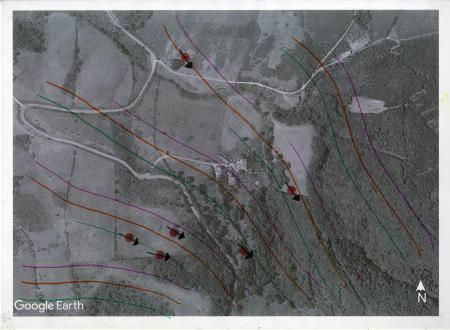
wind map
-
 from a tree") info
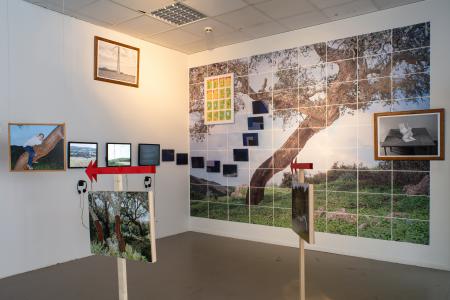
installation view
-
 info
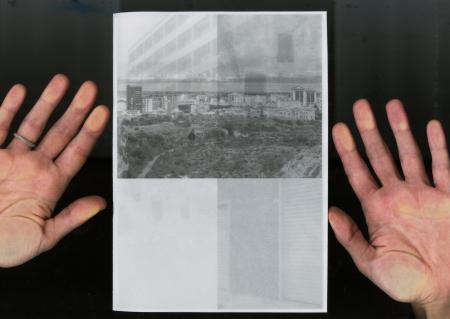
self-published book printed on tracing paper (front cover)
-
 info
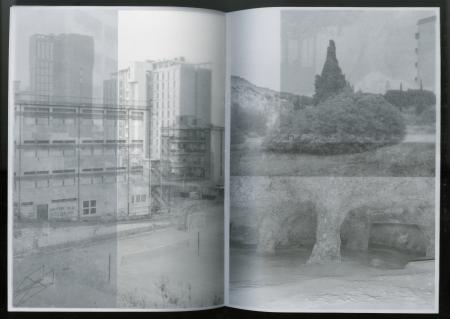
self-published book printed on tracing paper (inside)
-
 info
-
 info
-
 info
-
 info
-
 info
-
 info
-
 info
-
 info
self-published photo book
-
 info
self-published photo book
-
 info
self-published photo book
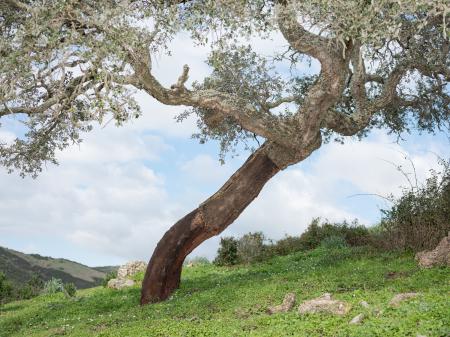
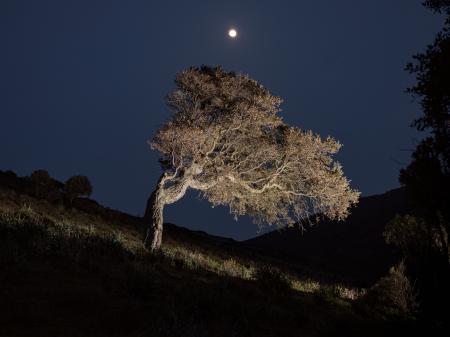
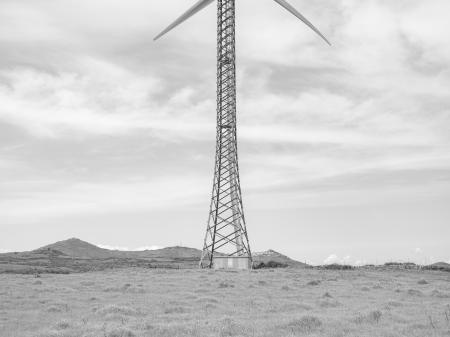
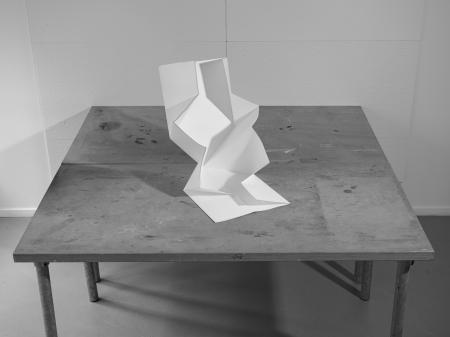
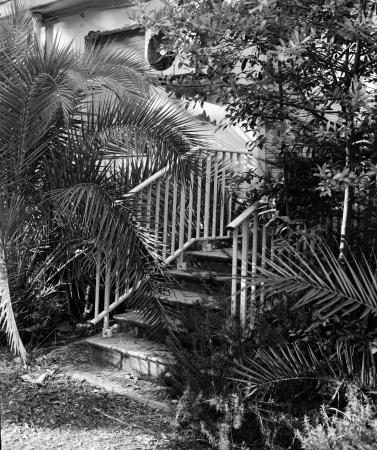
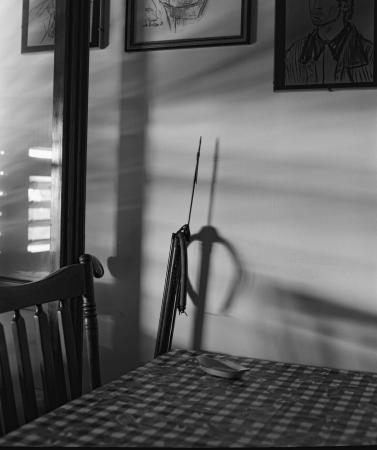
Rather than understanding landscape as a fixed image available for contemplation, I approach it as a relational construct shaped by multiple voices, memories, and forms of situated knowledge.
I am an artist, photographer, and visual researcher living and working between Italy and the Netherlands.
I was born in northern Italy as the child of parents from Sardinia, the Italian island in the Tyrrhenian Sea. Throughout my life I have had to confront the fact that my extended family lived far from me, in a place that could have been home, and yet perceived by those around me exclusively as a dream-like holiday destination. This tension between personal geographies and external gaze, became the lens through which I began to question how places are narrated and framed. Inscribed in the context of relations marked by dominance and subordination, my practice is a way to deal with those power structures, propagated socio-economically through oppressive (and sometime silent) tools.
To give an example, my latest work focuses on building an atlas of dominant winds in the Gallura region of Sardinia. Through photography, curatorial practices and design, this project aims to challenge the extractive conception of natural elements within the island-continent dialectic. Activating the communities living in Gallura my goal is to facilitate an active exchange between them and the land they live in, bringing up non-dominant narratives about wind as something other than a resource to collect, and promoting a horizontal cartographic approach. In doing so I question both wind and photography’s extractive nature.
My studies in psychology and neuroscience naturally inform my research approach, allowing me to integrate reflections on perception, representation, modelling of reality, and the experience of the self in space. All these elements, together with a non-extractive and collaborative methods give my practice a multi-layered structure, where data visualisation, artistic research, politics and photography overlap and influence each other.
Websites
Social media
Curriculum vitae
Education
-
2024 - 2026MA Photography & Society Den Haag, Koninklijke Academie van Beeldende Kunsten diploma
-
2024 - 2024The Photo Solstice Fondazione di Sardegna
-
2022 - 2023Master in Photography IUAV University of Venice diploma
exhibitions
-
2026It takes [1] to see [2] KABK - Royal Academy of Art Den Haag, Netherlands The group exhibition it takes [1] to see [2] explores photography both as a tool of inquiry and as an object of analysis. We are living in a reality where we are numbed by the constant bombardment of images. How do images shape our collective consciousness and individual identities? How can an image symbolize both visibility and disappearance, intimacy and societal structures, in a fragmented world that has lost grand narratives? The concept of this exhibition is oscillation, which is understood as a continuous, back-and-forth swing, a dynamic process where your mind actively swings back and forth among entirely different scales of reality. Today, photography is used to navigate the mediated and material reality, subjects and structures, as well as the ideas of representation, expression and communication. All this is happening within a context of slow violence - a destruction that is continuous and multi-generational, therefore, easily goes unnoticed, swallowed by the speed of the present. However, how can we use the method of oscillation as a creative process? We treat shifting states - inside and outside, past, present and future, personal and public - not as fixed binaries, but as interconnected modes of existence. Rather than passively observing the changing landscape, we use photography to carefully slow the pace of a gaze, look at the horizon and resist the visual chaos. Over two years of the Master Photography & Society (MAPS) programme, we have formed as a collective of people - inspiring, caring for and challenging one another. Together we are unlearning the common rules of photography - rather treating the medium as a representation of the world, we see it as a space for an interaction with others and ourselves. In the time of uncertainty, the works of 13 MAPS students explore personal and collective positions within ongoing social realities. The reflection on the individual creative processes is showcased in a customisable title. For the audience, it takes [1] to see [2] is left open. The void gives space to imagine what it takes to see. Group
-
2026TRACE Kunstgang Leiden Leiden, Netherlands Many argue that the notion of “trace” is well-suited to define what photography is. Historically, the photograph has been seen as an indexical trace of reality, a historical record of past events. But the concept of trace goes far beyond photography’s probative function. While photographs are (quite literally) traces of light frozen as images, they can also show nostalgic traces, material residues, or ideological leftovers. On the one hand, photographs are traces of light entombed as images, and on the other, they contain narrative hints that beckon discovery and exploration. In a sense, decoding a photograph means following its trace. Only then does the desired signification come to terms with indexical probation. Despite their different interpretation of trace, it is the longing for investigation that brings these photographs under the same roof in this exhibition. Group
-
2025To touch the sun Paradise Den Haag, Netherlands To Touch The Sun is a group exhibition by first-year students Master Photography and Society that invites audiences to take a critical look at a pressing crisis: the complex and layered spatial challenges currently facing the Netherlands. Fifteen works make up the exhibition – each taking this crisis as the starting point. The first-year students in conversation with the Dutch journalistic platform De Correspondent, invite you to join our exhibition from 9 to 14 June 2025. It will take place at Paradise, which is a collaboration venue between West Den Haag and KABK. This crisis centers around competing — and often conflicting — priorities, including housing, energy transition, water management, recreation, economic development, public health, nature conservation, and biodiversity. While these tensions may remain largely invisible to the broader public, their urgenc is becoming increasingly undeniable. Through varied visual languages and artistic strategies, the participating artists explore and interrogate these unseen pressures. The works reflect on the multiple dimensions of the crisis, offering alternative perspectives, subtle provocations, and space for dialogue. Our collective work invites viewers to engage with the critical questions shaping the physical, social, and political landscapes of the Netherlands today — and to consider what role art can play in illuminating the unseen. Group
-
2024From Here On Jest Turin, Italy Group exhibition resulting from a mentorship programme for 13 artists under 30, mentored by Francesca Cirilli, Tommaso Parrillo (Witty Books), and Tomaso Clavarino. Group
-
2022A Future Ruin Selinunte Archaelogical Park Selinunte, Italy A Future Ruin explores the possibility of introducing new layers of meaning into an existing body of work, whether through personal or public questions, formal considerations, or shifts in content. It departs from the idea that all images are possible and that the creative process cannot be fully controlled. Photography is understood as a moment of creation that can only survive if it remains open to contamination by the present. Group
Projects
-
2024
(a wind tale) from a tree Aggius, Italy mirkopirisi.com/a-wind-tale-from-a-tre The history of Sardinia has been shaped by dynamics of exploitation and socio-economic subordination to continental powers. While in the past the island was considered as a vast reservoir of mineral resources, within the context of the ecological transition wind has become the new resource to be extracted. Terna’s projects are a clear example of this tendency: the Tyrrhenian Link, the deepest energy underwater cable ever built, will connect the island to mainland Italy in order to improve Sardinia’s grid stability while simultaneously redistributing the energy surplus generated by wind power to the peninsula. This comes with little to none short term reduction in energy costs for Sardinian residents, which remain among the highest in Italy. Starting from a childhood memory, (a wind tale) from a tree challenges these dynamics of internal colonialism that continue to position Sardinia as a reservoir of resources to be exploited for the benefit of the mainland. The project proposes the creation of a collective and dispersed atlas of the maestrale, the island’s dominant wind, through the cataloguing of wind-bent cork oak trees in Gallura, a region in northern Sardinia. The maps that constitute the atlas are collectively designed and subsequently woven in tapestries using traditional Sardinian textile techniques. In this way, (a wind tale) from a tree becomes a political device capable of bringing Sardinian communities into dialogue with the territories they inhabit, considering wind as something other than a resource to be exploited. At the same time, the project reflects on the extractive nature of photography and cartography as instruments of cultural hegemony within the context of Italy’s colonial discourse.
-
2024
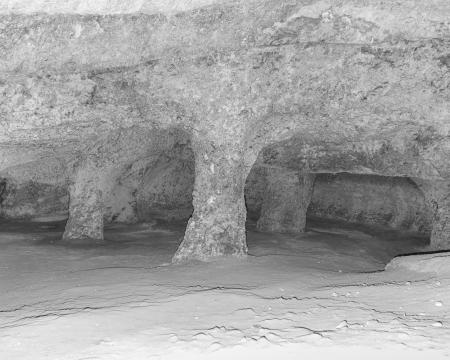
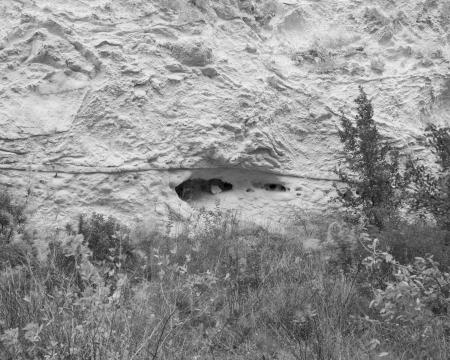
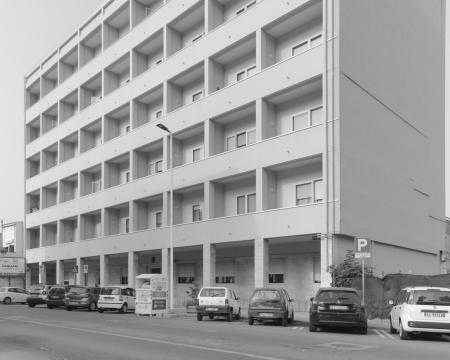
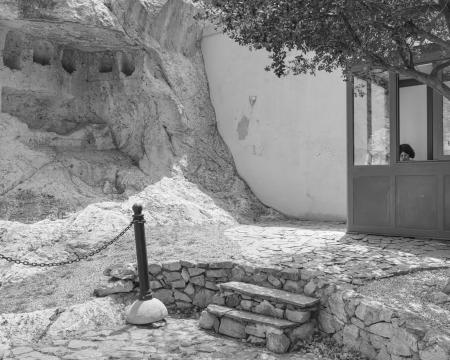
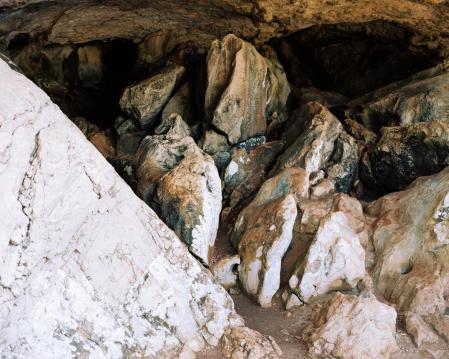
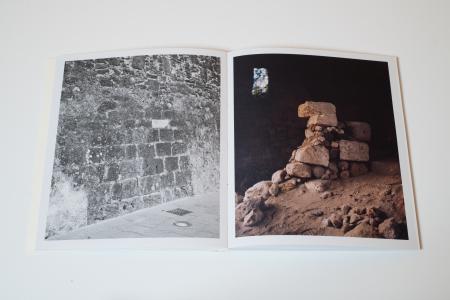
Tuvixeddu Fondazione di Sardegna Cagliari, Italy mirkopirisi.com/Tuvixeddu Tuvixeddu is the name of the hill where the largest Punic necropolis in the Mediterranean area is located. Carved into the limestone, the area was used by the Carthaginians and the Romans to provide a resting place for the dead. The ease of working with limestone also allowed them to build several infrastructures such as aqueducts and water cisterns. These tombs, and the larger caves as well, were inhabited by refugees during World War II, offering shelter to the living during the bombings on the city of Cagliari. In the 1900s, extraction activities began, leading to the creation of a large artificial canyon and the consequent destruction of part of the necropolis. In recent times, a redevelopment plan for the area was proposed, including the construction of a residential complex, which never came to fruition. This photographic research aims to promote a dialogue between past and present, through the theme of inhabiting. A place meant for the dead, transformed into a cement plant and then used as a home for the living during - and after - WW2: Tuvixeddu and its neighborhood embody the attributes of the perfect stage where contraddictions and paradoxes of living take place.
-
2023
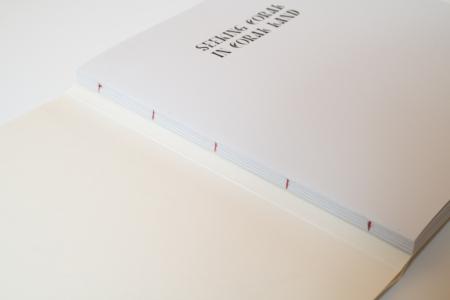
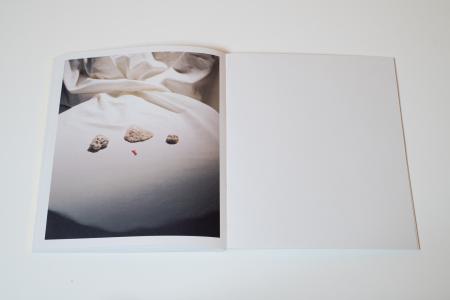
Seeking coral in coral land Alghero, Italy mirkopirisi.com/SCCL In Ovid's 'Metamorphoses' red coral (corallium rubrum) is said to be born when Perseus, in an attempt to free Andromeda, places the head of Medusa on a rock. The seaweed that comes into contact with the Gorgon's blood petrifies, transforming into red branches. Influenced by this tale, scholars have long considered red coral as either a plant or a rock - and only since the 16th century, as an animal, giving it the reputation of a magical and mysterious species. Following the myth, I explored a stretch of coastline in northwest Sardinia called the Coral Riviera: here for centuries, coral fishing has attracted artisans and traders, making this place a focal point in the Mediterranean Sea. This photographic research seeks to explore, through a near-archaeological approach, how mythological elements are reflected in the landscape. Here, human and natural variables transform themselves and, through the photographic process, they become something different. The transformation of the landscape and human-nature interactions thus become subjects of investigation, revealing how cultural and natural aspects merge and mutually influence each other. In this way, the photographs place the myth in a specific and defined location (the Coral Riviera) while simultaneously exempting this place from the rules of the world, transcending space and time, and evoking the magic and mystery of coral nature. The narrative of the coral's birth and its constituent elements becomes the starting point to showcase a hybridised landscape, familiar yet unknown, in constant evolution, and far from its stereotypical representations as a tourist destination characterised by visions of unspoiled nature frozen in time.
Publications
-
2024Master in Photography / Viaggio in Italia Book VIA INDUSTRIAE S. GRAZIANI, J. BENASSI, A. SPRANZI, F. ROMANO, J. P. CORTES Foligno, Italy viaindustriae.it/en/books/master-in-photography The editorial project Master in Photography / Viaggio in Italia–composed of four photographic zines and two posters–gathers the outcomes of the 2021, 2022, and 2023 activities of the Master in Photography at the IUAV University in Venice. Presented in its itinerant and experimental form, the project involved a series of residencies across Italy dedicated to photography, designed and structured in collaboration with guest lecturers to strengthen the relationship with the context and with Italy's social and natural landscape. The Master in Photography proposed a geographical exploration that also became metaphorical, crossing different grounds and distant territories. The group, composed of participants, lecturers and the people they met along the way, forms a context of permanent discussion and growth. The editorial project is a co-edition by Viaindustriae, ICCD, a+mbookstore, lUAV University in Venezia and Master in Photography cultural association. Over the past five years, the ICCD has become a valuable partner for all those involved, by offering access to its photographic archive and, through these publications, identifying a form of permanence – conceptual and concrete – of the experiences. The four published issues are dedicated to four different workshops; in each residency, the instructors presented an initial research theme from which the students developed a personal project. All of the residencies took place through a multi-vocal conversation in collaboration with institutions and realities spread throughout the territory. The four published issues are dedicated to four different workshops; in each residency, the instructors presented an initial research theme from which the students developed a personal project. All of the residencies took place through a multi-vocal conversation in collaboration with institutions and realities spread throughout the territory.
Secondary art-related activities
-
2025 - --Educator @ MA Phography & Society (KABK) - Publication Week On-going
-
2025 - --Curator On-going
-
2023 - --Book designer On-going
-
2021 - 2026Freelance photographer On-going